

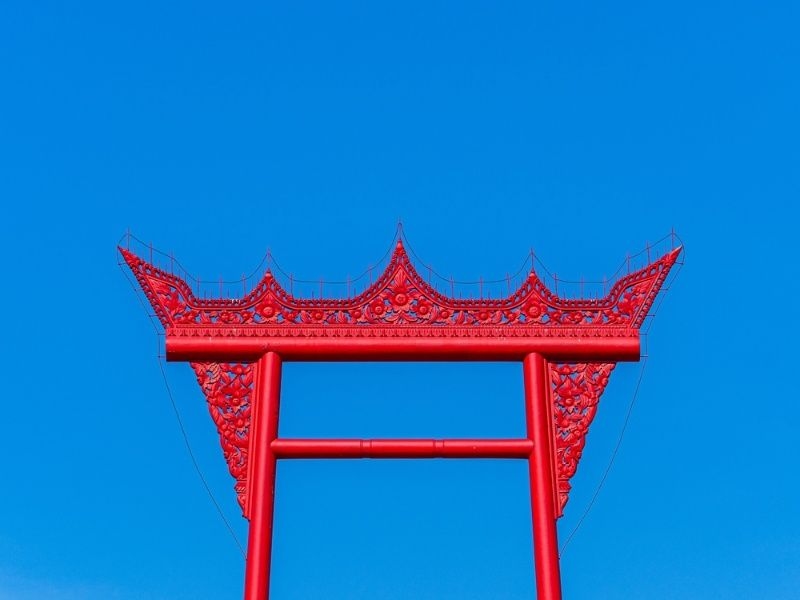
Located near the northern end of old Bangkok is the giant swing—or Sao Chingcha, which, translated from Thai, means “to rotate in a circle”—which is one of the most significant cultural sites in Bangkok. The history of the giant swing and Thai and Brahmin religions and the similarities between the giant swings and Thai and Brahmin architecture and how they interconnect are representative of the way of life of the Thai people, which has existed for many centuries. Going beyond merely being able to learn about the ceremonies that take place at the giant swing through the perspective of the various cultures that have impacted Thai culture throughout its history allows those who appreciate historic sites greater opportunities to experience the rich history of Bangkok through the three historic elements of architecture, religion, and culture associated with the giant swing or simply provides a visitor to Bangkok with the uniqueness of this activity during their time in Bangkok at the giant swing.
The Giant Swing, or Sao Chingcha, is one of Bangkok's iconic historical sites and a major tourist attraction. The Giant Swing, a large red wooden structure representing Thailand's rich religious heritage, offers a glimpse into Bangkok's combined spiritual, architectural, and traditional history spanning over 200 years. Tourists visiting the Giant Swing will not only be able to take pictures with it, as it is regarded as a major part of Thai culture, but also learn about its historical significance.
The Giant Swing is located next to Wat Suthat, another significant temple in Bangkok. Historically, the Giant Swing was used for important ceremonies in Thailand; as such, it has since become one of the most notable attractions visited by tourists from all over the world who are interested in learning about Thailand's history or taking photographs next to it.
The Giant Swing (Sao Chingcha) in Bangkok is an iconic landmark of Bangkok's Old Town and is a short walk from many other important attractions of the city (temples, monuments, and markets), about 5 to 15 minutes.
The Giant Swing is situated directly in front of Wat Suthat, making it easier for visitors and tourists to walk to many other major cultural attractions nearby. This prime location makes the Giant Swing a "bucket list" item to visit while touring Bangkok.
Visitors can pair their Giants Swing visit with other local attractions, thereby enhancing the overall travel experience.
Because of its bright red color (provided by painted teak), the Giant Swing attracts many visitors who want to take beautiful photographs of it within Thailand's skyline. Travelers to Thailand can enjoy the historical significance of this monument beyond simply visiting one of the country's many monuments. By visiting the Giant Swing, they can also view an object of Thailand's past that illustrates the importance of spirituality for the time period it represents, fundamentally changing or adding depth to how travelers perceive the Giant Swing.
Also Read: Reach the Top and Soul of Kuala Lumpur at Batu Caves
Constructed in 1784 at the instigation of King Rama I to perform Brahmin rituals, the Giant Swing was originally built to honor the Hindu deity, Shiva. This makes Giant Swing an unusual example of Hindu influence within Thailand's primarily Buddhist society.
Historically, a Hindu priest would swing from the Giant Swing in an act of daring to symbolize the passing of divine power (blessing) from the gods to the people. Over time, because performing the ritual was unsafe, it was discontinued, and the Giant Swing has since become a significant part of Thai culture.
At Sao Chingcha, many people participated in the swinging actions as part of a ceremonial tradition. The giant swing in Bangkok has long been a symbol of prosperity and blessings from the gods to the people of Thailand.
There are many examples throughout history that show the giant swing's importance and utility to Bangkok, beyond being just an architectural feature. The giant swing has been called a "gateway between earth and heaven," allowing the people to interact with the divine.
Throughout its long history, the giant swing in Bangkok has undergone multiple restorations to keep it structurally sound; in fact, the most recent two were completed in 2007. The current swing is constructed again with, you guessed it, teak, the same type of wood from when the swing was first made.
While the giant swing in Bangkok was originally a modern structure, it has undergone numerous restorations to preserve its historical look and feel, allowing visitors to enjoy the swing as intended.
-1776946139-r.jpeg)
It is easy and exciting to see the giant swing in Bangkok, as it is very centrally located (accessible via taxi, tuk-tuk, or public transportation). Many tourists include the giant swing in their cultural walking tour of "Old" Bangkok.
By visiting Sao Chingcha, one can see many other temples in the area and get a great idea of the rich Thai cultural heritage. You will be amazed by the beautiful architecture and gain a better understanding of Thai culture through visits to the temples and the giant swing.
Must Read: Bangkok Travel Hacks: Save Money on Flights & Hotels in 2026
Try to visit the giant swing in Bangkok early in the morning or late in the afternoon. Both of these times offer cooler weather and more interesting light for photography.
Times of day when not many people are visiting Sao Chingcha also offer many more peaceful and immersive experiences.
When visiting the giant swing in Bangkok, it is best to dress modestly, as you will also be visiting other religious sites. When visiting the giant swing and Sao Chingcha, dress comfortably and wear good walking shoes, as you will be walking on cobblestone streets. Make sure to bring some water, follow local customs, and take time to learn about the giant swing in Bangkok (understanding its history helps provide insight into Thailand as a whole and its people).
The Giant Swing in Bangkok, Thailand, is an important cultural landmark; it is not only a physical landmark or something to see but also represents a significant part of Thailand's culture and spirituality over the years. Visitors to the Giant Swing in Bangkok, whether they have a strong interest in history or are just looking for something interesting, find that they can enjoy themselves and remember their visit.
Although traditional ceremonies no longer take place at the giant swing in Bangkok, it is still culturally important for festivals in the area. Visitors can see local festivals happening around the site, which show how the Sao Chingcha and the giant swing in Bangkok are connected to the region's festival culture.
Visitors cannot ride the giant swing in Bangkok due to numerous safety regulations. However, you can still appreciate the beauty of the giant swing from ground level, and there are nearby locations from which you can safely view Sao Chingcha and appreciate the architectural importance of Saudi.
The majority of visitors to the giant swing in Bangkok will spend about 20-30 minutes there, taking pictures, exploring Sao Chingcha, and learning about the giant swing's history before moving on to see the temples and other historical sites in the broader historical context of Bangkok.
No, there is no entry charge to view the giant swing in Bangkok from outside. Visitors can explore Sao Chingcha and the surrounding areas at no cost, gaining insight into the giant swing of Bangkok’s history and culture.
One of the most significant components of Brazilian culture is the giant swing, Bangkok’s traditional roots, and historical ceremonial practices. As such, one way this site distinguishes itself from others around the globe is the relationship between its structure and the Brahmin-based ceremonial rights associated with the giant swing in Bangkok.
This content was created by AI