

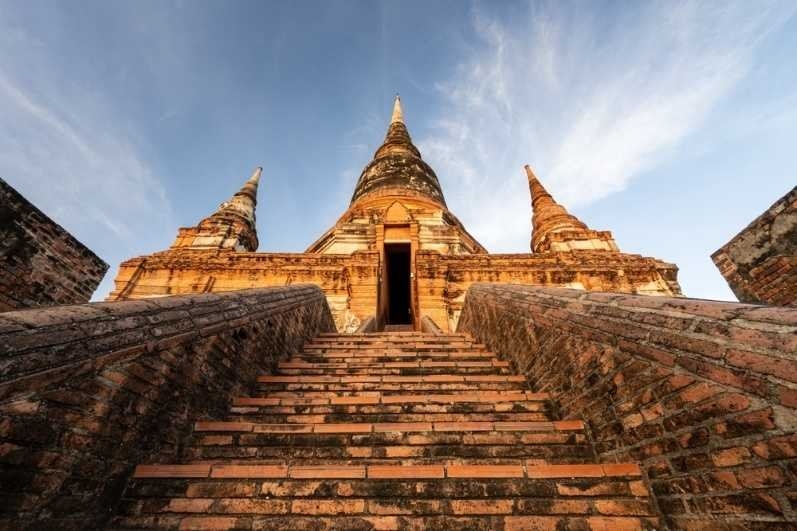
Wat Yai Chai Mongkhon is one of those temples in Ayutthaya that really sticks with you. If you’re heading to this ancient city, put it right at the top of your list. With its huge chedi reaching toward the sky, peaceful grounds, and that famous reclining Buddha, it’s a place where you get history, a sense of calm, and plenty of great photo ops all at once.
Ayutthaya wasn’t just any old city—it used to be among the world’s biggest. UNESCO lists the old city as a World Heritage Site for its cultural and architectural significance. And while you’ll see plenty of ruins here, Wat Yai Chai Mongkhon stands out for one simple reason: it’s still alive with activity. Monks live and practice here, keeping traditions going as the centuries-old walls look on.
This guide covers a bit of everything—the history of Wat Yai Chai Mongkhon, Wat Yai Chai Mongkhon's entrance fee, its top sights, travel advice, wat yai chai mongkhon tickets, and whether you should add those tickets to your Ayutthaya route.
The temple’s roots go all the way back to 1357, under King U-Thong, the guy who started the Ayutthaya Kingdom. He built the temple for monks returning from Sri Lanka, fresh off studying Buddhist teachings.
Its name means “Great Monastery of Auspicious Victory.” Later, King Naresuan expanded it to commemorate his victory over the Burmese in the late 1500s.
Royal ties like that kept the temple going; unlike plenty of others that crumbled after the Burmese invaded in 1767, Wat Yai Chai Mongkhon never stopped being maintained and respected.
Try This: Bangkok Temples You Must Visit to Experience Thai Buddhism
People are often surprised by how well-kept Wat Yai Chai Mongkhon feels, especially compared to other nearby ruins.
Monks really live here and meditate here—you feel a sense of peace you just don’t always get at temples that are basically museums now.
This giant, bell-shaped tower is massive—one of the tallest in Ayutthaya. Climb the steep stairs and you’ll get sweeping views of the temple grounds and beyond.
Rows of Buddha statues in saffron-colored robes line the walkways. It’s a bold, beautiful sight.
One of the first things most travelers want to know: how much does it cost to get in?
| Visitor Type | Typical Admission Cost |
| Foreign Adults | 20–40 Baht |
| Thai Citizens | Usually Less |
| Children | Free or Discounted, Depending on Age |
For such a big historical spot, it’s a bargain.
No need to book ahead—just pay at the gate. Easy for anyone rolling through Ayutthaya, whether you’re renting a bike, hopping on a tuk-tuk, or arriving by car.
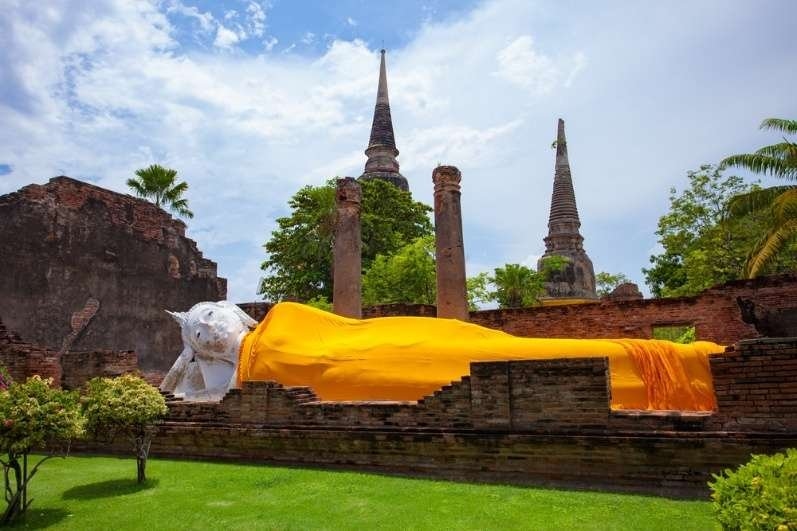
This is one of the main draws. You’ll find the reclining Buddha statue near the chedi. Draped in a brilliant yellow cloth and resting against a crisp white base, the Buddha represents the moment of entering final enlightenment. It’s a bright spot, both visually and spiritually.
People linger here as
There are various things on display for you to see inside the temple grounds, and they are mentioned below:
You can’t miss it. Climb up if you’re feeling energetic—the view from the top stretches across Ayutthaya’s ruins.
Rows and rows of matching Buddha statues in saffron robes wind their way around the temple. It’s a signature look for the place.
There are shaded nooks for quiet reflection. The temple’s still in use, so be mindful of ongoing ceremonies and keep the volume low.
Must Try: Old Town Bangkok Travel Guide: Temples, Sights, Tips
Midday can be brutal under the tropical sun.
You’ll want to dodge the noon heat, especially from March to May, when temperatures can reach 35°C or higher.
Finding Wat Yai Chai Mongkhon is pretty simple—it’s about 2 km southeast of the main historical park.
Make a day out of it—combine this with stops at Wat Mahathat, Wat Phra Si Sanphet, and Wat Chaiwatthanaram.
It is best to go prepared rather than fall for chaos, and here are the travel tips for first-timers to Wat Yai Chai Mongkhon:
- Set aside at least an hour, maybe a bit more, to really see everything.
Wat Yai Chai Mongkhon isn’t just another spot on the tourist map—it’s a powerful blend of history, living Buddhist practice, and some truly jaw-dropping scenes. Learn a little about its story, check the current entrance fee, and take time with the reclining Buddha. You’ll walk away with much more than just some good photos.
Love history, have an eye for photography, look for spiritual connections, or just want a day out in Thailand with a difference? This place checks all the boxes. When you’re ready to plan, resources like Bangok.com have plenty of guides to help you dig even deeper. So, go ahead—start mapping out your own Ayutthaya adventure and let Wat Yai Chai Mongkhon surprise you.
Yes, you can. The steps are steep—wear good shoes—but from the top, the view across the ruins makes it worth it. It allows individuals to enjoy the trip efficiently.
There is no specific time for it, but most people take an hour to ninety minutes. That lets you climb the chedi, photograph the Buddhas, admire the reclining Buddha, and wander the grounds without rushing.
Absolutely. The grounds are wide and flat, so it’s easy for kids to get around. The big Buddha statues and a chance to climb the chedi are usually a hit. Just keep an eye on younger kids by the steep stairs and remind them to be respectful—monks and worshippers are there.
Yes, you can definitely take photographs here, but just be considerate of where you are and the place's traditions and norms. Don’t use flash during ceremonies, and look out for signage in areas where photography isn’t allowed.
Definitely, Wat Yai Chai Mongkhon can be visited at any time of the year. The temple stays open, and the gardens get especially green. You’ll want an umbrella or a rain jacket and shoes that won’t slip on wet paths.
This content was created by AI