

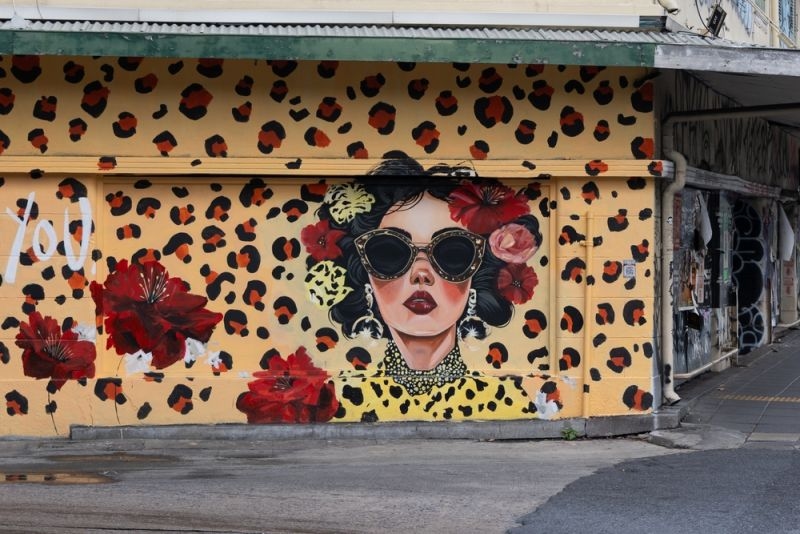
Today, the street art scene is a part of the fabric of life in Bangkok. Old shop houses, narrow lanes, concrete walls and buildings behind a busy road are all showcased by murals. Some pieces are massive and masterfully carved; others appear rugged, playful or unfinished. It's part of the reason it's a thing that's so appealing.
One thing common to Bangkok street art is that it frequently treats food or animals, local characters, as well as everyday life and politics, humour, and the shifting nature of neighbourhood identity. It's not something that has to be the forte of an art collector. Take down streets slowly, look up, and check side streets. Let's take a closer look at the street artworks that bring the colour to Bangkok's walls in this blog.
Street art in Bangkok works because it rarely feels completely separate from its surroundings. A painted wall may sit beside a decades-old shophouse, a market, a canal, or a modern café. The setting becomes part of the artwork.
Bangkok Street Art and Graffiti range from large commissioned murals to quick graffiti tags. They should not all be treated as the same thing. Murals may be carefully designed for a particular wall, while graffiti can be more spontaneous, coded, or personal.
Bangkok street art also borrows from illustration, Thai visual culture, pop art and cartoon-like characters. Some works are bright and funny. Others are darker. The variety keeps the streets from feeling visually repetitive.
A useful way to read street art in Bangkok is to consider what sits around it. A mural showing food near a market has a different meaning from an abstract piece behind a modern shopping area.
Small details matter too. Faces, shop signs, local animals, religious references and familiar street scenes often turn a simple painting into something tied to its neighbourhood.
Don't Miss: Temple Views and Historic City Charm at Golden Mount Bangkok
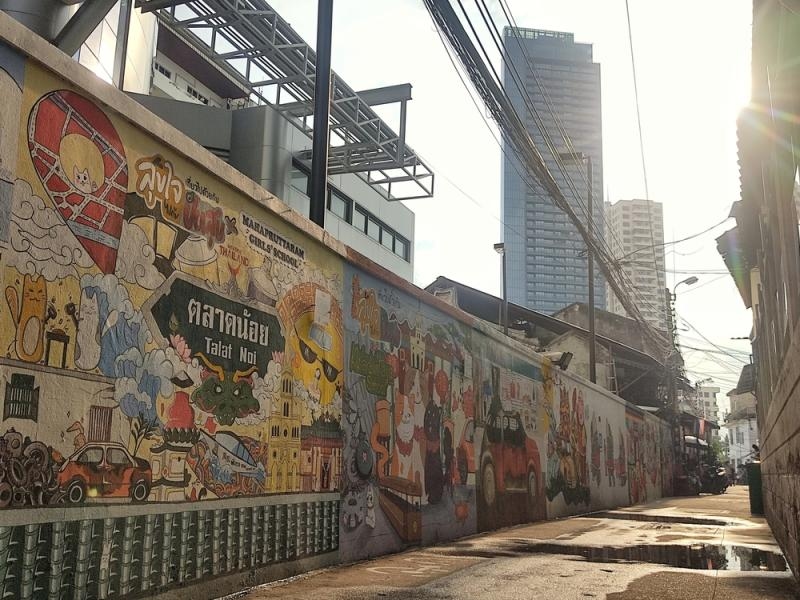
The strongest Bangkok street art locations are usually found where older streets, creative communities and changing commercial areas overlap. Chinatown and Talat Noi are particularly known for colourful walls, while other areas have smaller clusters.
Talat Noi is one of the most interesting Bangkok street art locations because the artwork sits naturally among old buildings, workshops, cafés and narrow lanes. Murals can appear beside weathered walls rather than against perfectly prepared surfaces.
That makes the neighbourhood feel layered. You see new art, old architecture and everyday activity at the same time. Go slowly here. The best pieces are not always on the main road.
Chinatown adds another texture to Bangkok street art. Chinese-Thai history, food culture, signage, and dense architecture create a busy visual background.
Charoenkrung is also important to Bangkok street art because creative projects have developed alongside its older commercial character. Large murals are mixed with smaller works, giving visitors different styles within a relatively manageable area.
A Bangkok street art tour does not need to be complicated. Walking is usually the point. You notice painted shutters, tiny characters, and details that disappear when viewed through a vehicle window.
During a Bangkok street art tour, watch for:
A Bangkok street art tour is partly about observation. You may see fewer famous murals than expected but notice much more of the city.
Different Bangkok street art locations offer different experiences, so choosing an area depends on what you want to see rather than chasing one famous wall.
| Area | Visual character | Best suited for |
|---|---|---|
| Talat Noi | Old lanes, murals, industrial details | Walking and photography |
| Chinatown | Dense streets, cultural references, colourful walls | First-time visitors |
| Charoenkrung | Creative spaces and larger artworks | Contemporary art fans |
| Khlong San | Quieter streets and local surroundings | Slower exploration |
The comparison is not a ranking. Each area shows a different side of Bangkok street art.
The best street art in Bangkok is subjective because murals change and personal taste varies. One visitor may prefer massive colourful paintings; another may stop for a tiny stencil hidden beside an old doorway.
The Top spots to see street art in Bangkok include Talat Noi, Chinatown, and Charoenkrung, with nearby lanes often providing the more interesting surprises.
For the top spots to see street art in Bangkok, timing matters. Morning walks can feel calmer, while later hours bring more activity. Bright daylight also helps when photographing detailed murals.
The best street art in Bangkok is sometimes not the largest piece. A small work that fits perfectly into its surroundings can say more about the neighbourhood.
Start with one known Bangkok street art location, then leave the main route. Look down side lanes and around corners. This approach works better than trying to cover the entire city in one afternoon.
For editorial reliability, the observations here focus on established art districts, recognisable neighbourhood patterns and visitor-friendly walking areas rather than treating every painted wall as a permanent attraction.
Must Read: Best Stalls for Every Shopper at Chatuchak Weekend Market
Street art in Bangkok adds another dimension to the walls. Old buildings turn into canvases, the narrow lanes turn into informal galleries, and the familiar neighbourhoods turn into an additional layer of visual representation. But Bangkok street art is not set in stone: the murals fade, the walls change, and new street art appears. It's why it's worth seeing on the big screens.
The biggest and most well-known street art in Bangkok may not be the best. Use sometimes is "just the one you see when you are searching for something else. So now you, of course, should find a Bangkok street art spot and start to stroll without playing with speed, and the rest of the story shall be dreamed by the city.
Yes. Many of the murals are colourful and feature animals, cartoons, and fun characters. Families should only be cautious in the presence of traffic, narrow roads, or hawkers at the markets.
Typically, during any sightseeing, visitors in general take pictures of public murals and walls. Don't stand in front of entrances or take close photos without permission.
Yes. Artworks outside face natural weather conditions, as well as building and repainting. The appearance of the wall during any viewing might be different at another time.
There are also some areas that are still active after dark; others may have limited lighting. Daytime is typically the better time for spotting details and photographing.
Yes. Street art is also found in other neighbourhoods, just not as prominent or with as high a concentration. Smaller and more unobvious items can be discovered on an outing around the neighbourhood.
This content was created by AI